China Top Mooring Buoy Factories & Suppliers

The 2024 Industrial Intelligence Report: Global Maritime Infrastructure & Supply Chain Optimization

The Strategic Evolution of Mooring Buoy Systems

Decoding the shift from traditional berthing to intelligent offshore positioning.

⚓ Navigating the Global Maritime Landscape

In the realm of maritime logistics, mooring buoys are no longer just passive floatation devices. They represent the critical interface between deep-sea vessels and coastal infrastructure. As global trade volumes expand, the demand for high-durability, low-maintenance mooring solutions has surged.

China has emerged as the epicenter of this industrial evolution, transitioning from high-volume manufacturing to precision-engineered maritime technology. Today's top factories integrate material science with advanced hydrodynamics to provide "Information Gain" to procurement officers—offering data-driven insights into buoy longevity and environmental impact.

Maritime Infrastructure
15+ Years Service Life Span
UV15+ HDPE Resistance
0% Corrosion Rate (Poly)
300% Buoyancy Stability

China Factory 4.0: Supply Chain Resilience

How automation and local integration are redefining procurement efficiency.

Automated Rotomolding

Utilizing CNC-controlled rotational molding to ensure uniform wall thickness and zero stress points in polyethylene buoys.

🛡️

Material Innovation

Integration of high-density polyethylene (HDPE) with closed-cell polyurethane foam filling for unsinkable performance.

🌐

IoT Integration

Smart buoys equipped with Beidou/GPS sensors for real-time tension monitoring and positioning alerts.

♻️

Sustainability

100% recyclable materials meeting the stringent environmental requirements of modern "Green" ports.

Company Mission

Our Mission: Value Redefined

Proof is in the performance: Building a great boat or marine component comes down to three core fundamentals: Time-honoured design, premium materials, and construction standardisation.

Green understands that no single purchase is more important to an organization than buying mission-critical maritime equipment. Our mission is to establish global leadership as a sustainable builder, dedicated to expanding the reach of maritime sport and industry through cutting-edge technology.

  • Innovation in manufacturing and delivery
  • R&D investment for design advances
  • Best price-value relationship
  • Exceptional nationwide support

Global Procurement Trends & Localized Applications

Understanding the specific needs of different maritime sectors ensures maximum ROI on equipment investment.
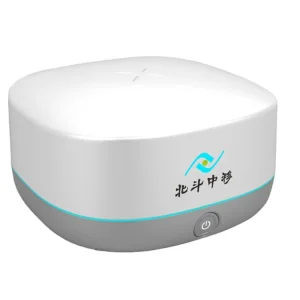
Advanced GPS Integration

📍 Application Scenarios

  • 🔹 Offshore Oil & Gas: Heavy-duty steel-reinforced mooring buoys designed for extreme tension and deep-water berthing of tankers.
  • 🔹 Marine Aquaculture: Lightweight PE buoys for cage positioning, resistant to bio-fouling and chemical degradation.
  • 🔹 Port Navigation: High-visibility lateral and cardinal marks integrated with solar LED lighting and Beidou RTK precision.
  • 🔹 Defense & Security: Stealth-profile mooring systems for naval assets with low acoustic signature properties.

Technical Insight: HDPE vs. Traditional Steel Buoys

For decades, steel was the industry standard. However, the Semantic Search of modern engineers reveals a pivot toward "Corrosion-Free Maritime Solutions."

Feature Steel Buoys Rotomolded HDPE
Maintenance High (Repainting/Sandblasting) Near-Zero
Impact Resistance Dents/Structure Failure Flexible/Elastic Recovery
Service Life 8-10 Years 15-20+ Years

Q&A: Maritime Procurement Intelligence

Q1: How do China factories ensure the quality of mooring buoys for international waters? +
Top-tier Chinese suppliers adhere to ISO 9001 and IALA (International Association of Marine Aids to Navigation and Lighthouse Authorities) guidelines. Quality control involves ultrasonic thickness testing, buoyancy verification, and UV accelerated aging tests to ensure performance in the harshest salt-spray environments.
Q2: What is the lead time for customized industrial mooring systems? +
Standard models typically have a lead time of 15-20 days. Fully customized solutions involving specific buoyancy requirements or integrated IoT sensors usually range from 30-45 days, depending on the complexity of the mold and sensor calibration.
Q3: Can these buoys be integrated with existing GPS and AIS systems? +
Yes. Modern mooring buoys from China 4.0 factories are designed with internal mounting flanges for AIS (Automatic Identification System) transponders, solar power regulators, and GPS antennas, allowing for seamless integration into a port's digital twin management system.